


Recent Blog Posts
How Is School Residency Determined After Divorce in Illinois?
 Divorce can change where a child spends time during the week. When parents move into their separate homes in different school districts, they have to start thinking about where the child is allowed to enroll.
If you are facing a school residency issue in 2026, a Joliet, IL education law attorney can help you understand your child's enrollment rights and work through any disputes.
How Does Illinois Determine a Child's School Residency?
Under the Illinois School Code, 105 ILCS 5/10-20.12b, a child's school residency follows the residence of the parent who has legal custody and with whom the child lives.
The child's living arrangement can determine which district is responsible for enrollment, rather than giving the parents a choice between the two districts. However, if neither home is clearly the child's primary residence, it can make that determination more complicated.
How Do I Appeal an Indicated DCFS Finding in Illinois?
 An indicated finding from the Illinois Department of Children and Family Services (DCFS) can raise serious questions about what comes next. The finding may remain on the State Register for years and can affect certain jobs or volunteer positions involving children.
If you receive an indicated finding in 2026, you generally have 60 days from the date of the notification sent by DCFS to request an administrative appeal. A Joliet, IL DCFS defense attorney can help you understand the process and prepare your DCFS appeal case.
What Does an Indicated DCFS Finding Mean in Illinois?
An indicated finding means a DCFS investigator concluded there was credible evidence that a child was abused or neglected. It does not mean that a criminal court has found you guilty of a crime or that a juvenile court has found that you abused or neglected a child. DCFS administrative findings are separate from those court proceedings.
What Does a Guardian ad Litem Do in an Illinois Family Law Case?
 A guardian ad litem is an attorney the court appoints to investigate a child's circumstances and make recommendations concerning the child’s best interests. These attorneys are regularly appointed in contested custody cases or involving parental responsibilities, parenting time, or other issues affecting a child’s welfare.
If a guardian ad litem has been appointed in your case in 2026, a Joliet, IL family law attorney can walk you through what that means for your parental responsibilities or parenting-time dispute.
What Is a Guardian ad Litem in an Illinois Family Law Case?
A guardian ad litem, often called a GAL, is a licensed attorney the court appoints. Under the Illinois Marriage and Dissolution of Marriage Act (750 ILCS 5/506), a judge can appoint a GAL in any case involving custody, parenting time, or a child's general welfare. The GAL’s role is to investigate the case and make recommendations based on the child's best interests, regardless of either parent's wishes.
What Is Mediation and Is It Required for Divorce in Illinois?
 If you and your spouse cannot agree on how to end your marriage, you may not have to go straight to a courtroom. Mediation is a process where a neutral third party helps both spouses work through disagreements and reach their own decisions. Many people going through divorce in 2026 find a mediated divorce to be less stressful and less expensive than fighting it out in court.
If you are considering a divorce, a Joliet, IL divorce mediation attorney can help you understand the process and protect your interests at every stage.
Does Illinois Law Require Mediation in a Divorce?
Whether mediation is required depends on whether you and your spouse have children. Under 750 ILCS 5/602.10, each parent must file a proposed parenting plan during the divorce process. If parents cannot agree on parenting issues, the court will usually require mediation before asking a judge to decide those issues.
How Is Child Custody Decided in Illinois?
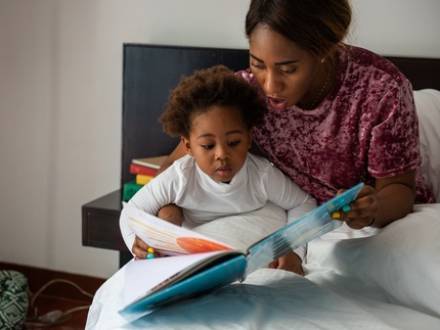 When parents separate, custody questions are often the hardest to resolve. The U.S. Census Bureau reported about 13.9 million custodial parents in 2022. These are parents raising children when the other parent lives outside the home. That number shows just how common parenting disputes and child support issues are across the country.
If you plan to file for divorce in 2026, knowing how Illinois courts make these decisions can help you protect your relationship with your child. For guidance specific to your situation, contact a Joliet, IL child custody attorney at Jordan Steele & Associates, LLC today.
Does Illinois Still Use the Term 'Child Custody'?
Illinois no longer uses the words "custody" or "visitation" in family court. Since January 1, 2016, the Illinois Marriage and Dissolution of Marriage Act replaced those terms with two concepts: parental responsibilities and parenting time. Parental responsibilities cover who makes major decisions for the child. That includes choices about education, health care, and religion. Parenting time refers to the schedule of when the child is with each parent. The focus is on function, not on one parent "winning" over the other.
What Are the Steps to Getting a Divorce in Illinois?
 Once you decide to end your marriage, knowing what to expect can make the process far less overwhelming. Illinois divorce law is straightforward in structure, even when the personal details are not. The Centers for Disease Control and Prevention recorded 672,502 divorces across the country in 2023, which means hundreds of thousands of families navigated the same steps you are facing now. If you plan to file for divorce in 2026, a Joliet divorce attorney can help you understand your options and protect your rights at every stage.
Does Illinois Require a Reason to File for Divorce?
Illinois is a no-fault divorce state, which means neither spouse has to prove the other did something wrong. The only legal ground for divorce is irreconcilable differences, which means that the marriage has broken down and cannot be fixed. Under the Illinois Marriage and Dissolution of Marriage Act (750 ILCS 5/401), a court grants a divorce once it finds that irreconcilable differences caused the breakdown, that efforts at reconciliation failed, and that trying again would not serve the family's best interests.
What Happens When DCFS Investigates Your Family in Illinois?
 A knock at the door. A call from your child’s school. A letter in the mail. When the Illinois Department of Children and Family Services (DCFS) gets involved with your family, it can feel like the ground has shifted beneath you. Families across Illinois are affected by these investigations every year. Last year alone, Illinois DCFS reported 238,169 hotline calls and 78,093 assigned child abuse and neglect cases statewide.
If you are facing a DCFS investigation in 2026, you are not alone, and you do have rights. Understanding what to expect, what steps to take, and what mistakes to avoid can make a real difference for your family. A skilled Joliet DCFS defense attorney can help you understand your rights and fight to keep your family together.





Get the Legal Help You Deserve
Call 872-314-0080 or fill out the form below to set up your consultation today.

| 1000 Essington Rd., Joliet, IL 60435872-314-0080 |
| 112 N Spring St., Elgin, IL 60120872-314-0080 |
From our offices in Joliet & Elgin, we serve clients throughout Will, Kane, DuPage, Grundy, and Kendall Counties, including but not limited to Algonquin, Aurora, Bartlett, Batavia, Bolingbrook, Carpentersville, Channahon, Coal City, Crest Hill, Downers Grove, Elburn, Frankfort, Gardner, Geneva, Glen Ellyn, Hampshire, Lemont, Lockport, Lombard, Manhattan, Minooka, Montgomery, Morris, Mokena, Naperville, Newark, New Lenox, North Aurora, Oswego, Plainfield, Plano, Romeoville, Sandwich, Shorewood, South Elgin, St. Charles, Sugar Grove, West Dundee, Wheaton, and Yorkville.
Results listed are not a guarantee or indication of future case results.
1000 Essington Rd.,
Joliet, IL 60435
872-314-0080


